
The short answer: neuroscience research from Cardiff University suggests that playing with dolls engages a part of children's brains linked to empathy and understanding others, even when they play alone. In the first study, children aged 4 to 8 showed this activity during solo doll play but not during solo tablet play. It's early research, but it gives real weight to something parents have long suspected: dolls are one of the simplest ways for children to practise caring about others.
If you've ever watched a small child tuck a doll into bed, feed it an imaginary meal, or comfort it after a pretend tumble, you've watched empathy being practised in real time.
It looks like play. And it is. But there's now neuroscience behind what's happening in that moment, and it's worth understanding if you're thinking carefully about which toys matter for your child's emotional development.
What the Science Says About Doll Play and Empathy
In 2020, researchers at Cardiff University's Centre for Human Developmental Science published the first study to use neuroimaging to look at children's brains during natural doll play. It appeared in the journal Frontiers in Human Neuroscience.
The team used a technology called functional near-infrared spectroscopy, which lets researchers measure brain activity while children move around and play freely. They studied 42 children aged 4 to 8, with full data from 33, as they played with dolls or with creative tablet games, either alone or with another person.
What they found was striking. During solo doll play, children's brains showed activity in the posterior superior temporal sulcus (pSTS), a region associated with social information processing, including thinking about other people's thoughts and feelings. During solo tablet play, even with open-ended creative games, that activity was much lower.
The researchers suggested this means children may be rehearsing social skills when they play with dolls, the kind of perspective-taking they'll use throughout life. They were also clear that this was a first step and that more research was needed.
That research has since followed. A 2022 study by the same team found that doll play prompted children to talk more about other people's thoughts and feelings, which researchers call internal state language. A 2023 study of 57 children with a broad range of autistic traits found that doll play was linked to social processing in the brain for children with both higher and lower levels of autistic traits, although they engaged in different ways.
It's worth knowing that this research was commissioned by Mattel, the makers of Barbie, and used Barbie dolls. It was carried out by university scientists and published in peer-reviewed journals, and its findings are about doll play in general rather than any particular brand, including ours.
Why Dolls? The Power of Narrative
It comes down to story.
When a child picks up a doll, they instinctively give it a life. A name, sometimes. Feelings, certainly. They tell stories, out loud or silently, about who this character is, what they want, what they're worried about and what makes them happy.
This kind of storytelling is how children make sense of the world. They're rehearsing emotional scenarios, working through feelings they've seen or experienced, and practising what it means to care for someone else.
A tablet game, however clever, sets the rules and the child responds. With a doll, the child creates the whole emotional world. As one of the Cardiff researchers put it, dolls encourage children to build their own little imaginary worlds and to think about other people and how they might interact.
This is also why open-ended, imaginative play matters so much in early childhood. The less a toy dictates, the more room a child has to create, solve problems, empathise and explore.
Why We Think Character Matters
Here's where we move from what the research measured to what we believe as toymakers.
A doll that is simply a doll is a blank canvas, and that has real value. But a doll with a name, a backstory, friends and a job to do hands a child a whole world to step into. We think the more vivid that world, the more there is to imagine, and the more chances there are to think about how someone else feels.
It's also why the dolls children keep for years tend to be the ones with real identities. They're not just something to hold. They're someone to know.
What to Look for in a Doll (Beyond the Obvious)
When you're choosing a doll for a child, whether your own or a gift, safety and softness come first. After that, these are the questions worth asking.
Does this doll have a real character?
Not just a look, but a personality. A story. A reason to exist in the world beyond sitting cute on a shelf.
Does it reflect a world the child recognises?
Children often connect most easily with characters that feel familiar. A doll that reflects Australian animals, landscapes, humour and everyday jobs can speak more directly to an Australian child than one designed for a generic global market.
Is it built to last?
The toys that shape children are the ones they return to again and again, over years. A doll that falls apart after a season isn't just poor value. It interrupts the relationship a child has built with that character.
Does it invite storytelling?
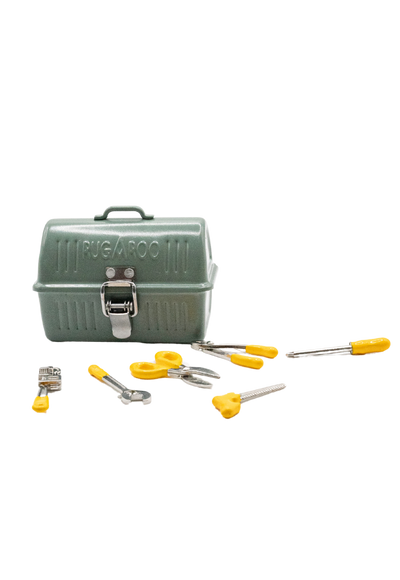
Books about the characters, miniature accessories and companion pieces all extend the imaginative world. The best dolls aren't an endpoint. They're an invitation into a larger world.
Is it right for the child's age?
Check the age guidance on every product. Many miniature dolls and accessories contain small parts or magnets and are designed for children aged 3 and over.

Why We Created Rugaroo
When we created Rugaroo, we weren't trying to compete with louder toys, flashing lights or fast trends.
The idea came from a deeply personal place. Years ago, while living in the Northern Territory, I held a wildlife permit and cared for Ginger, an orphaned wallaby joey whose mum had been hit by a car. For eight months he came almost everywhere with me, tucked safely in a pouch, until he was ready to be released back into the wild. The care, the connection and the heartbreak of letting go stayed with me long after he hopped away. In many ways, Rugaroo grew from that feeling.
I wanted to make characters that felt familiar to Australian children. The kinds of people they already know and love: the tradie, the surf lifesaver, the bushwalker, the sunbaker. And I wanted children to experience toys differently. Not as disposable entertainment, but as companions woven into childhood memories. Toys that get carried around for years, tucked into beds, brought on holidays and eventually packed away carefully to keep.
Because the animals are such a big part of our story, 1% of Rugaroo sales is donated to WIRES to help rescue and care for Australian wildlife. Read our story.
Rugaroo: Australian Characters Built for Australian Kids
Every Rugaroo doll is a character first. Each one has a name, a story, a personality and a place in an Australian landscape children instantly recognise.
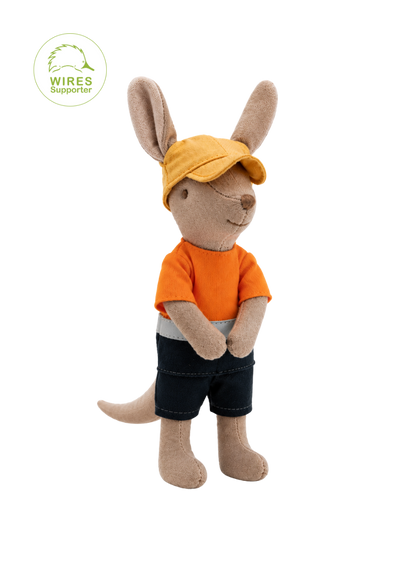
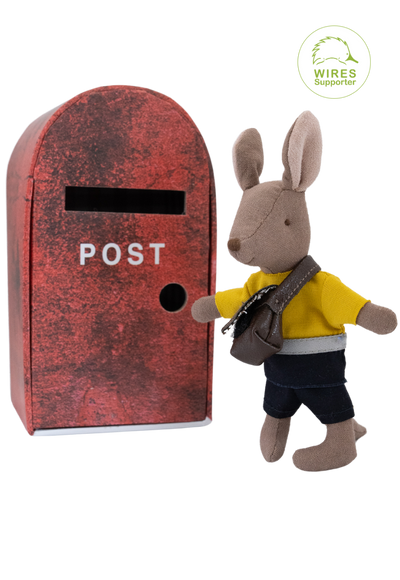
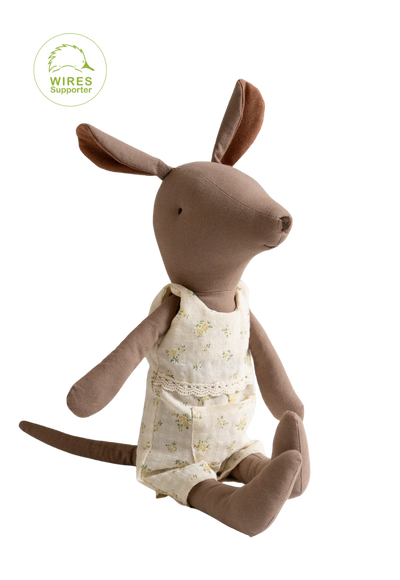
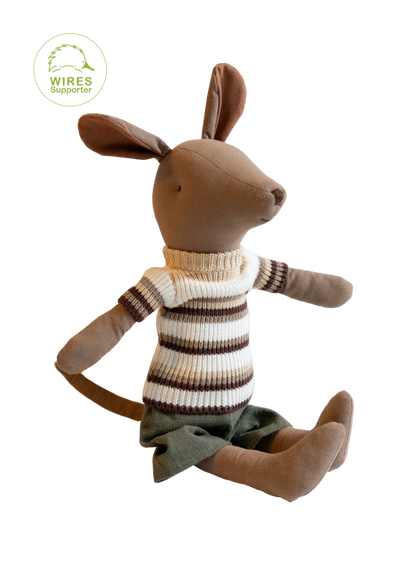
There's Dazza the Tradie Kangaroo, the hard-working dad who's always out on the tools. FIFO families often choose him so the kids have something that reminds them of dad while he's away.
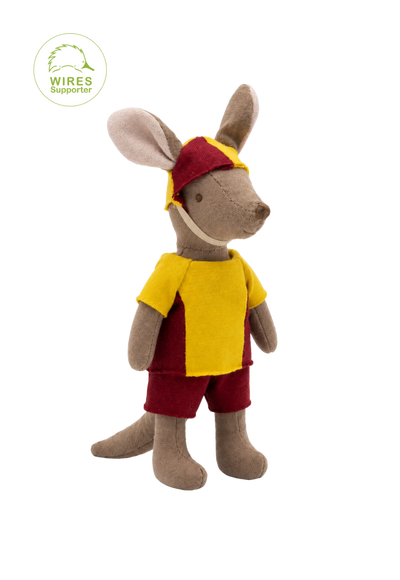
There's Sandy the Surf Rescuer Kangaroo, the lifesaver on the beach, a character that means something real to kids who've done Nippers or watched the lifesavers at their local beach.
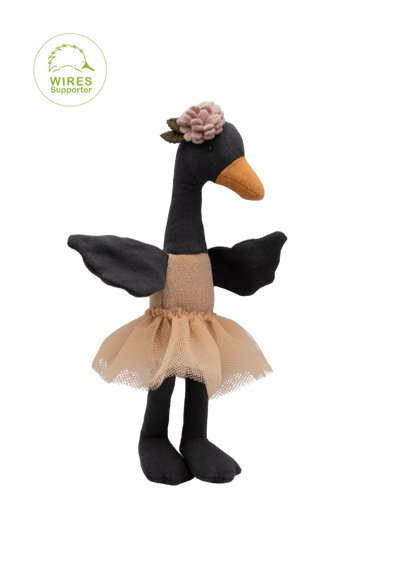
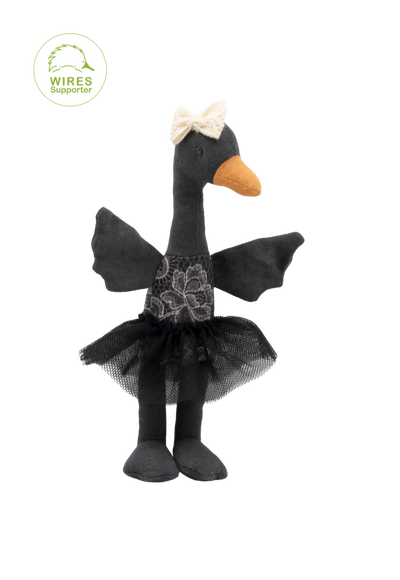
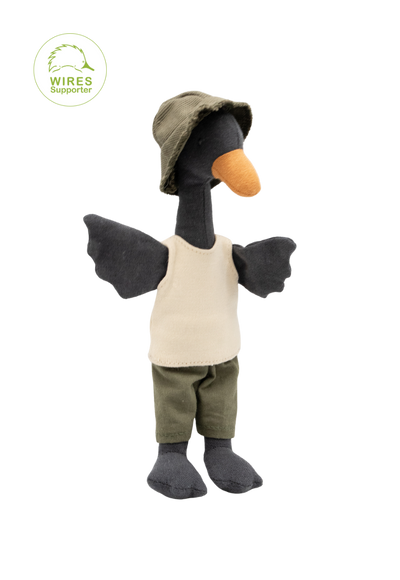
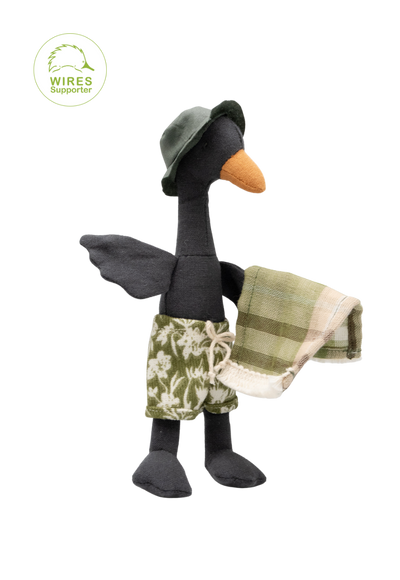
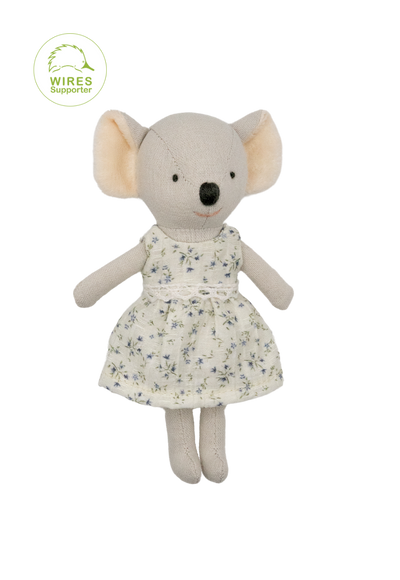
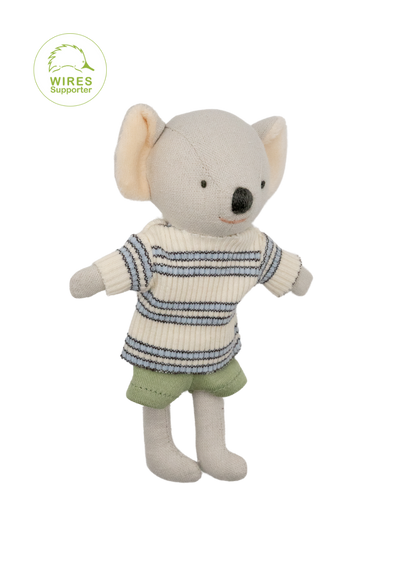
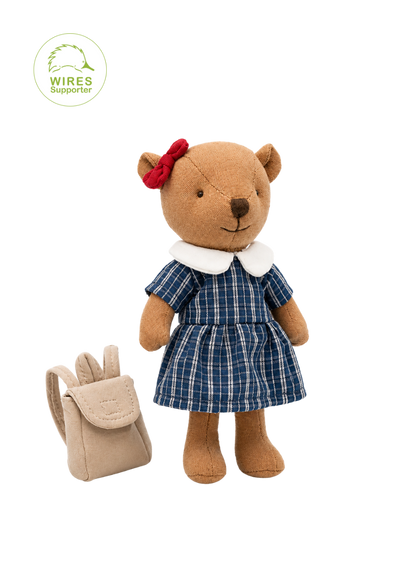
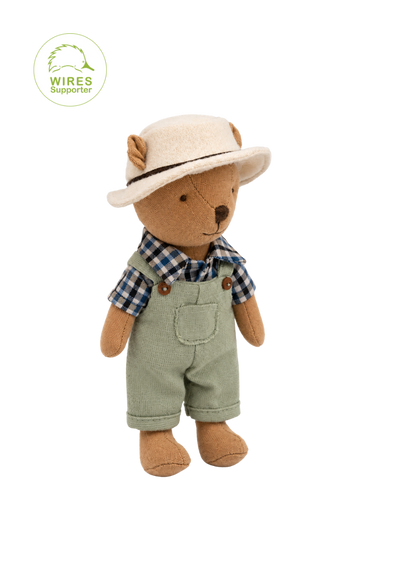
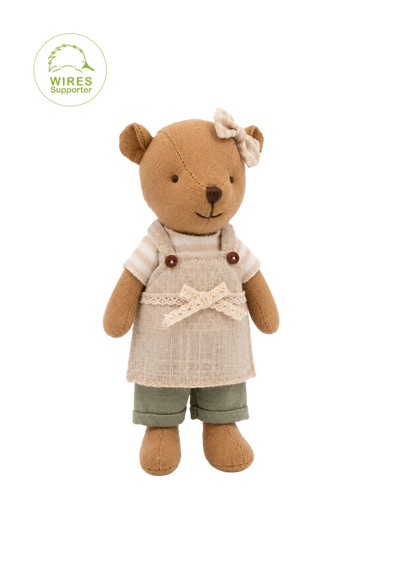
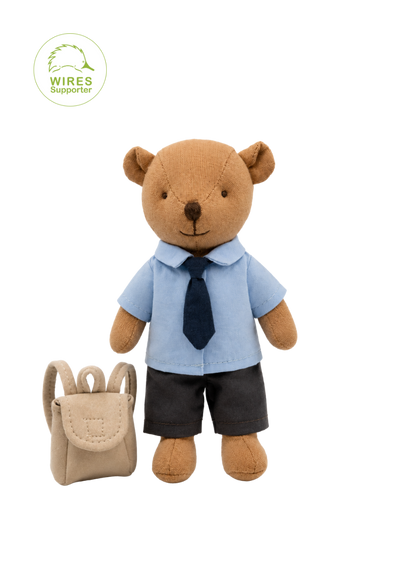
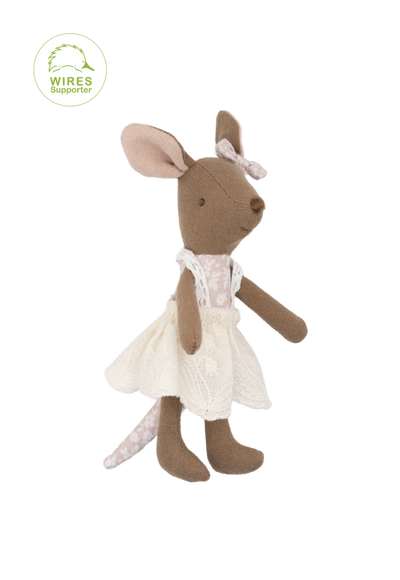
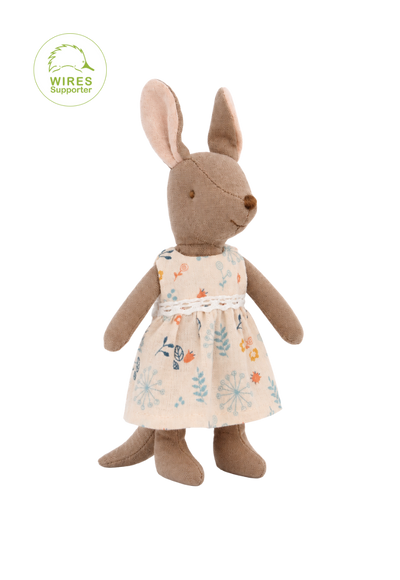
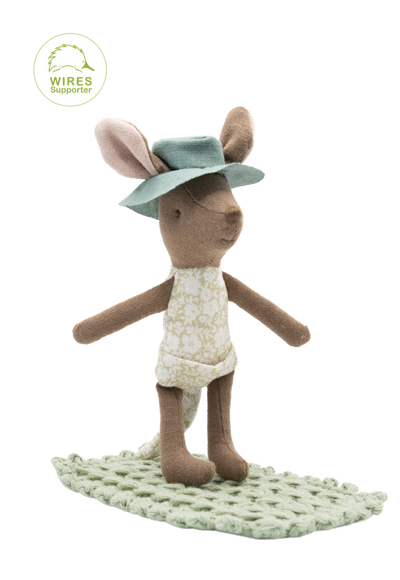
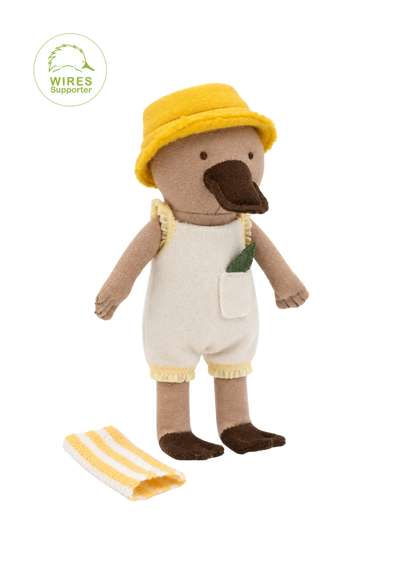
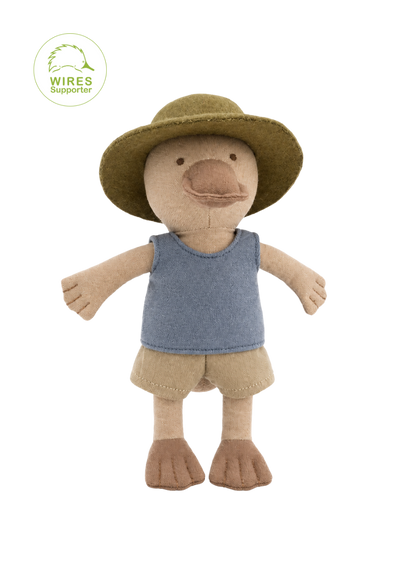
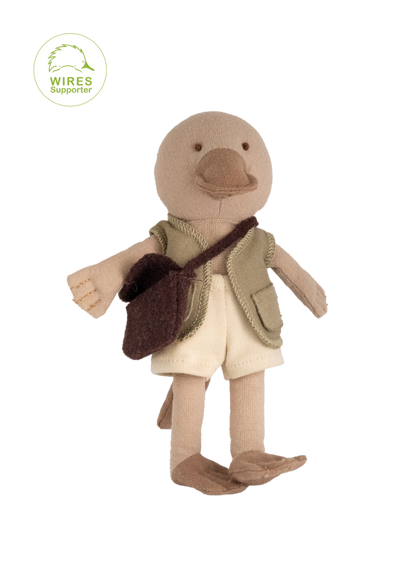
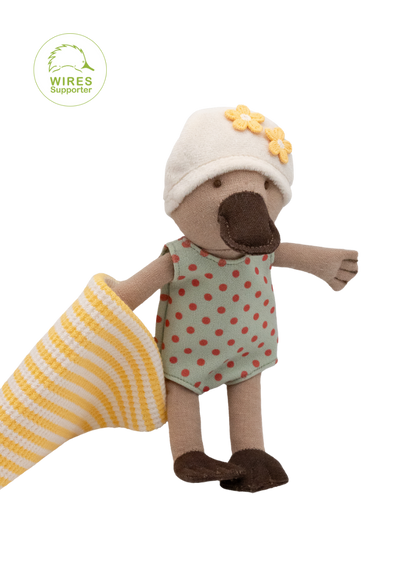
There's Shaz the Sunbaker in her vintage floral swimmers, Sheila the True-Blue, and Tully the Bushwalker Platypus, always ready for the next trail. Dusty and Bindi are our koala pair. Clancy and Maisie are off to Kindy with their tiny backpacks. And our Black Swan Series, including Reed the Wetlands Ranger and Byron the Sunbaking Black Swan, each carry their own quiet Australian story.
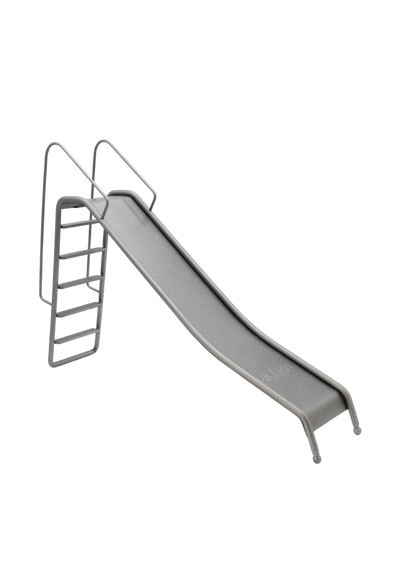
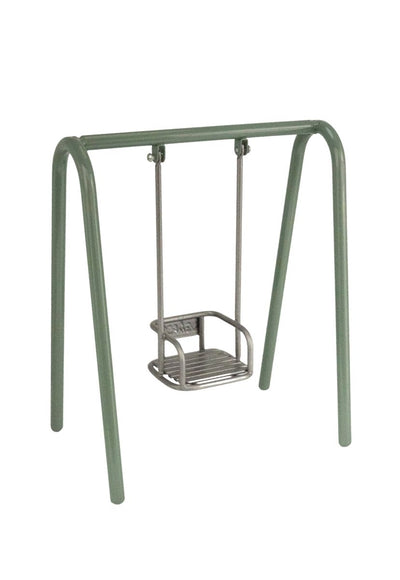
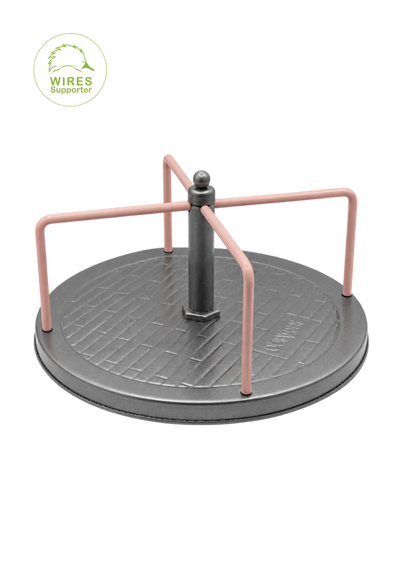
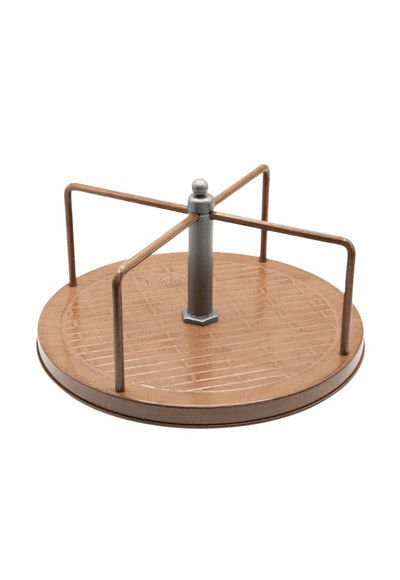
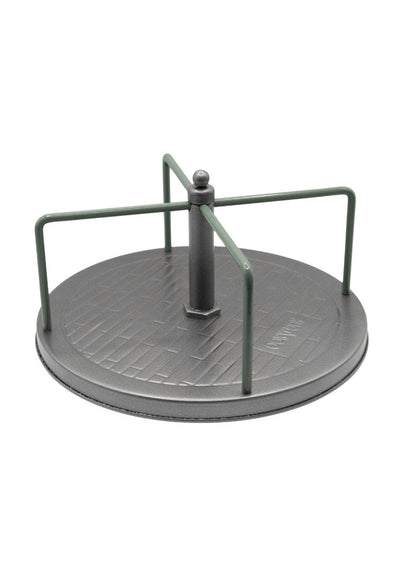
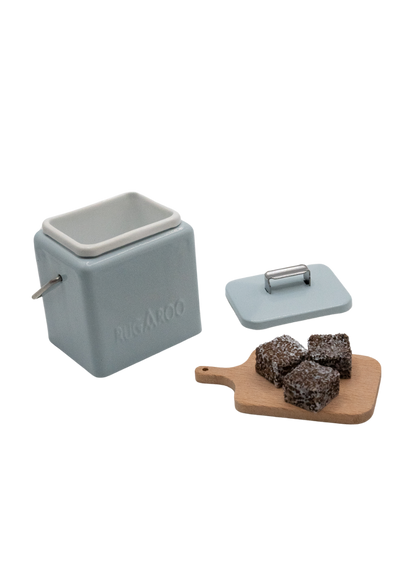
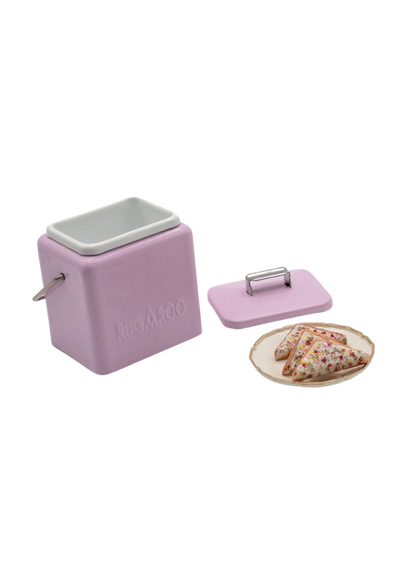
Their stories continue in our children's books, like Dusty and the Mango Tree and The Tradie Kangaroo and His Broken Friend, and the Miniature Playground gives them somewhere to play.
These aren't characters invented for a global catalogue. They grew out of Australia: its landscapes, its humour, its communities and its way of life. When an Australian child plays with a Rugaroo, they're exploring stories that already feel connected to their own world. That's the kind of play we hope every Rugaroo invites.

Frequently Asked Questions About Doll Play
Does playing with dolls help children develop empathy?
Research suggests it may. Cardiff University studies found that doll play engages a brain region linked to empathy and social processing in children aged 4 to 8, even when they play alone. The research is still early, but it supports what child development experts have long believed about pretend play.
Is doll play better than tablet play?
In the Cardiff research, children showed more social-processing brain activity during solo doll play than during solo play with creative tablet games. That doesn't make screens bad, but it suggests dolls offer something different: the child creates the story rather than responding to one.
Does doll play help autistic children?
A 2023 Cardiff study of 57 children with a broad range of autistic traits found doll play was linked to social-processing brain activity for children with both higher and lower levels of autistic traits, though they engaged in different ways. Children with fewer autistic traits talked more about others' feelings, while children with more autistic traits engaged more with the adults around them.
Does doll play help with language?
A 2022 study from the same team found that doll play prompted children to use more language about other people's thoughts and feelings, and that this kind of talk was linked to social-processing activity in the brain.
What age is doll play good for?
The Cardiff research studied children aged 4 to 8, but pretend play begins much earlier. Our miniature Rugaroo dolls are designed for ages 3 and up because they contain small parts and magnets. For babies and toddlers, our My First Mate Jackand Jill are large 50cm cotton kangaroo dolls that are safe from birth.
Is doll play just for girls?
No. The first Cardiff study found the same brain activity during solo doll play in boys and girls alike.
A Final Thought for Gift-Givers
If you're buying a gift for a child and wondering whether a doll is the right choice, it may well be one of the best you can make.
The research so far suggests doll play gives children a rich way to practise thinking about others, whether they play alone or together, in a way that's different from screen-based play.
The best gift you can give a child isn't the loudest toy in the room. It's the one they'll still be carrying around in three years. The one they'll whisper to before bed. The one they'll insist on bringing in the car, to the shops or on family holidays.
Give them a character worth knowing.
EXPLORE THE FULL RUGAROO FAMILY
Looking for a Christmas present? Read our guide to the best Australian Christmas gifts for kids.
Sources
- Hashmi, S., Vanderwert, R. E., Price, H. A. and Gerson, S. A. (2020). Exploring the Benefits of Doll Play Through Neuroscience. Frontiers in Human Neuroscience, 14, 560176.
- Cardiff University (2020). Doll play activates brain regions associated with empathy and social skills.
- Hashmi, S., Vanderwert, R. E., Paine, A. L. and Gerson, S. A. (2022). Doll play prompts social thinking and social talking: representations of internal state language in the brain. Developmental Science, 25(2), e13163.
- Keating, J., Hashmi, S., Vanderwert, R. E., Davies, R. M., Jones, C. R. G. and Gerson, S. A. (2024). Embracing neurodiversity in doll play: Investigating neural and language correlates of doll play in a neurodiverse sample. European Journal of Neuroscience, 60(3), 4097 to 4114.
- Cardiff University (2023). Doll play allows children to develop and practise social skills regardless of their neurodevelopmental profile.