

Rugabub
Play Mat Guide
How to Choose a Safe Play Mat for Your Baby
The Complete Guide to Baby Play Mats
How to Choose a Safe Play Mat for Your Baby
Babies spend a large part of their early development on the floor: rolling, stretching, crawling and discovering the world around them. A well-designed baby play mat creates a soft, safe and comfortable surface for these important milestones while protecting little bodies from hard floors.
For many families, a play mat quickly becomes the heart of the home. It’s where tummy time begins, where toys scatter across the floor and where little ones learn to roll, crawl and eventually take their first steps.
Today, parents are also thinking more carefully about the materials used in baby products. Questions about non-toxic materials, safety certifications and durability are becoming just as important as comfort and design.
This guide will help you understand what to look for when choosing a baby play mat, including the safest materials, ideal sizes and why many families choose large padded foam play mats for everyday play.


Why Babies Need a Play Mat
A baby play mat provides a dedicated space for babies to explore movement safely during the most important stages of early development.
During the first year of life, babies spend much of their time learning how to control their bodies. Activities like tummy time, rolling and crawling help strengthen muscles and develop coordination.
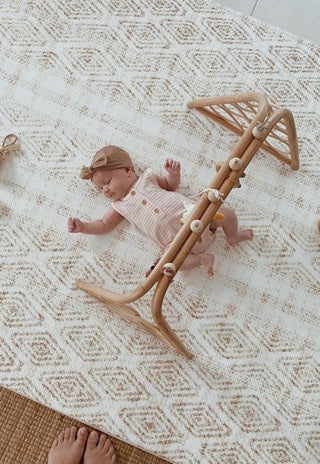
Tummy time is particularly important. When babies lie on their stomachs, they begin building strength in their neck, shoulders and arms. This helps prepare them for rolling, sitting and eventually crawling.
A padded play mat creates a comfortable surface that encourages babies to practise these movements. Without a soft surface, many babies become uncomfortable quickly when placed on hard floors.
As babies grow, the play mat becomes a space for:
• rolling and stretching
• learning to sit
• crawling and exploring
• playing with toys and books
• early imaginative play
Because babies spend so much time on the floor during these stages, the quality and safety of the surface they play on matters.
TPU Foam vs PVC Foam Play Mats
When researching play mats, many parents notice that there are different materials used to create foam mats.
One of the most common materials used in traditional foam play mats is PVC (polyvinyl chloride). PVC is a plastic that often requires additional plasticisers to make it flexible.
Some families prefer to avoid these materials and instead look for alternatives made from TPU.
TPU is often used in premium play mats because it can be produced without many of the chemical plasticisers commonly used in PVC products. It also provides a soft and supportive surface that is durable enough for everyday family use.
When choosing a play mat, it can be helpful to ask manufacturers about:
• the materials used in the play mat
• independent safety testing
• toy safety standards
• whether the surface is water resistant and easy to clean
Understanding the material used in your baby’s play mat helps ensure the play space is both comfortable and safe.
What Size Play Mat Is Best for Babies?
Play mat size is an important factor that many parents don’t consider until after their baby starts moving.
Newborns begin with tummy time, but very quickly babies start rolling, pivoting and exploring their surroundings. A larger play mat provides more space for babies to move safely without constantly rolling off the edge.
Many parents prefer large play mats because they grow with the child. The extra space allows babies to practise crawling, sit and play with toys while still remaining on a soft cushioned surface. Read more in this Play Mat Size Blog.
As toddlers grow, the play mat often becomes a space for:
• building with blocks
• reading books
• puzzles and creative play
• playing with dolls or toy cars
Choosing a larger play mat can help create a dedicated play zone in the home that continues to be useful as children grow.
What Materials Are Safest for Baby Play Mats?
Parents today are increasingly mindful of the materials used in products their babies interact with every day.
Many families look for play mats made from non-toxic materials that meet international toy safety standards.
A good baby play mat should provide:
• a soft cushioned surface (not fluffy - as that is pure plastic in disguise)
• durable foam structure
• water resistant and wipe-clean surface
• tested materials that meet safety standards
Water resistant play mats are particularly helpful for everyday life. Spills, drool, snack crumbs and other little accidents are inevitable with babies and toddlers, so being able to wipe the mat clean quickly makes life easier.
Durability is also important. Babies quickly grow into active toddlers, and a high-quality play mat should be able to handle years of everyday play.
Why Parents Choose Rugabub Play Mats
Rugabub play mats were created to provide families with a safe and beautifully designed play space that blends naturally into modern homes.
Designed in Australia, Rugabub play mats are crafted using premium non-toxic TPU, creating a soft and supportive surface for babies and toddlers.
Unlike many traditional foam play mats, Rugabub designs are inspired by woven rugs and natural textures. The result is a play mat that looks elegant in living spaces while still providing a comfortable surface for play. Rugabub are leaders in the play mat industry and have shaped how many play mats in the world look today.
Many Rugabub play mats also feature reversible designs, allowing families to switch between a stylish rug-inspired side and a playful illustrated landscape designed for imaginative play.
As children grow, the mat evolves from a tummy time space for babies into a foundation for small-world play with cars, dolls and toys.
Explore the full Rugabub collection here:


